Modernist Foodie
It's been awhile since I've posted. Just wanted to let everyone know I have a new blog that I've started that I'll be updating more regularly called Modernist Foodie at modernistfoodie.blogspot.com. It's a blog focused around my cooking experiments with modernist cuisine and molecular gastronomy. Check it out!
Udon Noodle House
Udon Noodle House is a cozy little restaurant located on one of the main streets in Roppongi, and we had to pass it everyday on our way to the train station. From its title you can easily guess what type of food they serve. The restaurant offers huge bowls of udon noodle soup with all kinds of fixings, and they roll up to the table piping hot – so hot, in fact, that when Sarah took a picture of me and her mom together, our faces were practically covered by the steam. We had to take at least four or five pictures before getting a decent shot. That was pretty funny.
Udon Noodle House was one of the first places I ate a meal with my girlfriend’s mother, so needless to say I was a little nervous. Having just met her for the first time in person a day before, I wanted to make a good impression. I had all kinds of concerns - don’t talk with your mouth full, wait for all the food to come before starting, don’t spill anything, use the chopsticks properly, don’t be a bumbling idiot…All these things were running through my head, but bottom line is I didn’t want to embarrass myself and play the role of the clueless American gaijin.
Still battling jetlag from the 18-hour flight and exhausted after a full day of amusement park rides at Tokyo Disneyland, I was focusing on completing some coherent sentences in conversation rather than analyzing the food at the table. I still was able to compose myself enough to take a few shots of the food, although I somehow forgot to take a picture of my own dish, which was a bowl of beef noodle soup.

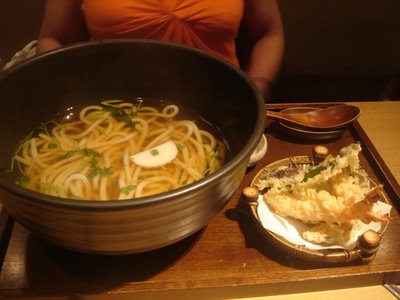
I forget the exact names of the dishes, but one was essentially udon with an assortment of seafood and the other was udon in a vegetable broth with tempura on the side. We shared everything, and it was delicious, hearty, and surprisingly enjoyable even on a hot summer day in Tokyo. I can only imagine how much better it would have been in the middle of winter. The noodles had wonderful texture and were clearly made with great expertise. It’s amazing how a good noodle can sometimes save a crappy broth or sauce, but a good broth or sauce can never save a crappy noodle.
Udon Noodle House was one of the first places I ate a meal with my girlfriend’s mother, so needless to say I was a little nervous. Having just met her for the first time in person a day before, I wanted to make a good impression. I had all kinds of concerns - don’t talk with your mouth full, wait for all the food to come before starting, don’t spill anything, use the chopsticks properly, don’t be a bumbling idiot…All these things were running through my head, but bottom line is I didn’t want to embarrass myself and play the role of the clueless American gaijin.
Still battling jetlag from the 18-hour flight and exhausted after a full day of amusement park rides at Tokyo Disneyland, I was focusing on completing some coherent sentences in conversation rather than analyzing the food at the table. I still was able to compose myself enough to take a few shots of the food, although I somehow forgot to take a picture of my own dish, which was a bowl of beef noodle soup.
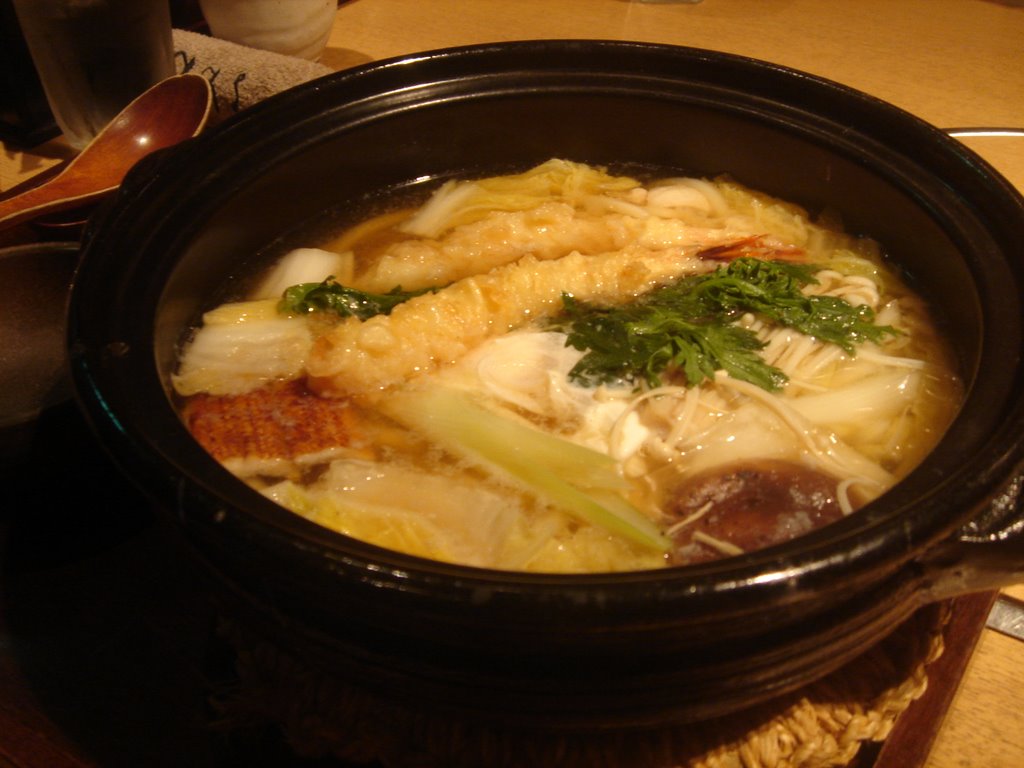
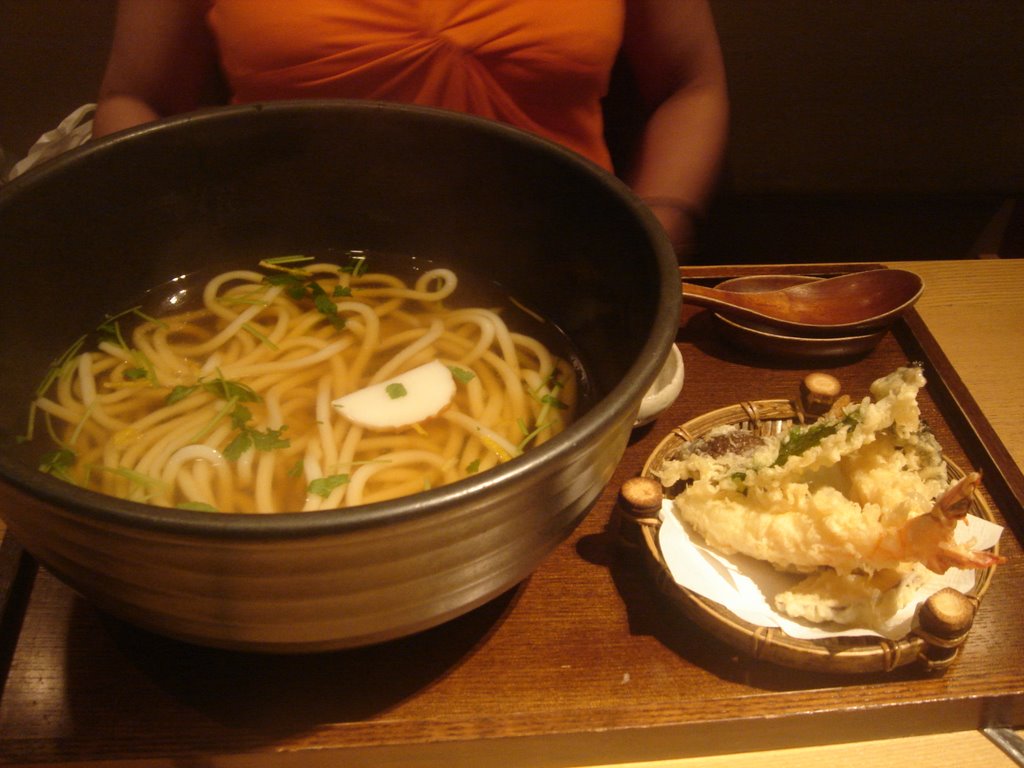
I forget the exact names of the dishes, but one was essentially udon with an assortment of seafood and the other was udon in a vegetable broth with tempura on the side. We shared everything, and it was delicious, hearty, and surprisingly enjoyable even on a hot summer day in Tokyo. I can only imagine how much better it would have been in the middle of winter. The noodles had wonderful texture and were clearly made with great expertise. It’s amazing how a good noodle can sometimes save a crappy broth or sauce, but a good broth or sauce can never save a crappy noodle.
Japanese Sweets and Desserts
It is said that we eat with our eyes first, our mouths second. In my opinion, there is no place on earth that has taken this more to heart than Japan. For centuries, the Japanese have been creating exquisite food, pleasurable as much as to the eye as the palette. They are masters of presentation whose creations are oftentimes so stunning that you’d rather forgo eating them than destroy something so beautiful, so perfect. Sweets (and food in general) are considered as much art as they are edible creations.
Whether traditional or borrowed from somewhere else in the world, the sweets I tried were almost always remarkable gastronomic delights, made with the care, attention to detail, and quality I have grown accustomed to finding in Japan. I was fortunate to try a number of pastries and desserts during my travels throughout the country, so I’m dedicating a full post to them. Some of the photos are shown below.

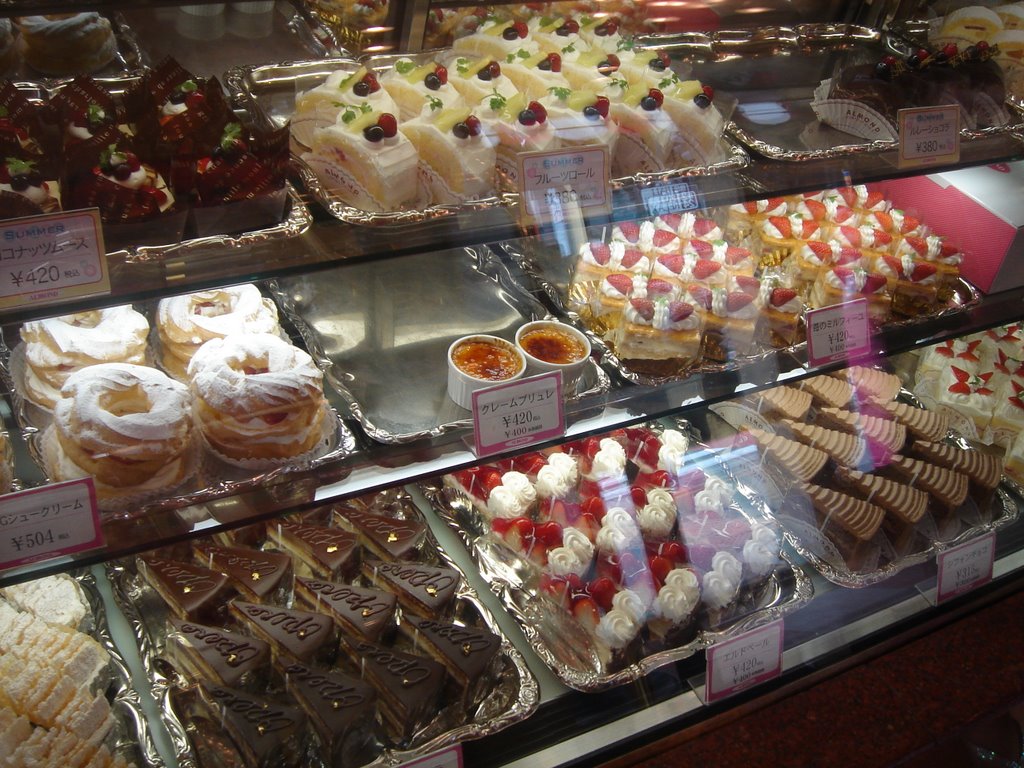
The photo above gives you a really good idea of the tremendous visual impact food can have. I took this photo at Isetan, one of the major department store chains in Japan, which sells food in addition to the typical clothes and make-up you’d expect to find. In fact, an entire floor is dedicated to food. This was just one display case of many, showcasing all kinds of sweet delights.

At Isetan, Sarah picked out quite a few cakes, and we tried them at home. One was this milk tea cake, which was absolutely delicious. The cake was surprisingly dense yet still fairly light, and the cream had a nice aromatic, Earl Grey flavor.
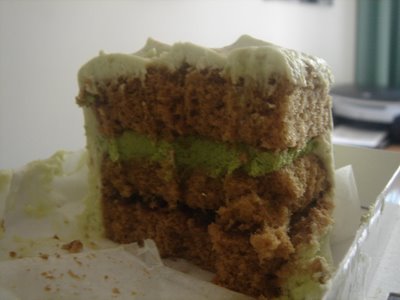
Another item we picked up was this green tea cake, which was extremely fluffy and had a slight bitterness to it, which I think is characteristic of chilled green tea.

Japan is the land of green tea and azuki, so naturally many desserts feature these ingredients. This was the last of the cakes we picked up from Isetan, which was essentially thin crepes with green tea cream and azuki paste sandwiched between the layers - delicious.


On our last day in Kyoto, Sarah and I stopped for an afternoon snack at a small café called Eikokuya. It had a nice patio area overlooking the grand staircase and busy travelers on the first floor of the train station. We ordered two slices of chiffon cake, one which was green tea, the other milk tea-flavored. Both cakes were amazingly light and fluffy – it was almost like eating pillows of air.

As we were walking back from one of the temples in Kyoto, we passed by a number of sidewalk vendors along a busy, tourist-laden street. This caught my eye, which was a cream puff with a green tea filling. It actually turned out to be one of the few disappointing snacks I had. The cream puff tasted a little hard and stale as if it had been sitting around, and the filling had an overwhelmingly bitter taste.
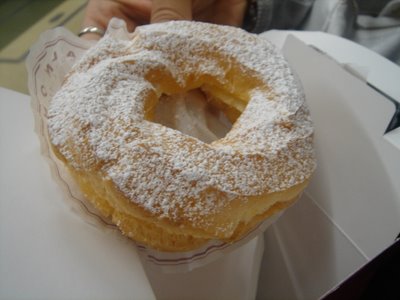

Back in Tokyo, on our way to the Meiji Jingu Shrine, we stopped into Almond, which is considered one of the best bakeries in the city. I tried one of Sarah’s favorites, choux de la crème, which was similar to a crème puff. It was light with whipped cream inside – a sweet treat to start the morning.
The Miyakes also ordered Lisa’s birthday cake from Almond, which I got to try. It was my first day in Tokyo and I arrived just as they were cutting it. I was still in a dazed stupor at that point, so I didn’t take a picture. The only thing I remember was the cake frosting tasting like maple-syrup – quite nice actually.

Hiroshima is famous for momiji-manju, which are sweet cakes shaped in maple leafs and made with all kinds of fillings. Azuki, chocolate, cream cheese, and jam are typical. The batter reminded me a little of a sponge cake. These were being sold everywhere we went, from Hiroshima station to Miyajima Island.


Sarah gave me a tour of her school’s neighborhood, and one of the areas she and friends would often go to grab lunch was Hiro-o, a quiet street with small shops and restaurants. Walking down the street, we spotted these red bean cakes, a childhood favorite of hers, being made fresh (shown above). It was nice biting into the warm and slightly chewy batter with sweet azuki paste inside.

I think we ate this fish-shaped cake in Hiroshima, but it was virtually the same in taste and texture as the one in Hiro-o.
So there you have it. I had a number of Japanese sweets, some of which were artsy and fancy and some of which were simple, humble, but nevertheless satisfying. I really enjoyed visiting Hiroshima and Kyoto and trying their local specialties. I can’t wait to go back to Japan to visit the rest of the country. I know many more tasty, undiscovered treats await.
Whether traditional or borrowed from somewhere else in the world, the sweets I tried were almost always remarkable gastronomic delights, made with the care, attention to detail, and quality I have grown accustomed to finding in Japan. I was fortunate to try a number of pastries and desserts during my travels throughout the country, so I’m dedicating a full post to them. Some of the photos are shown below.
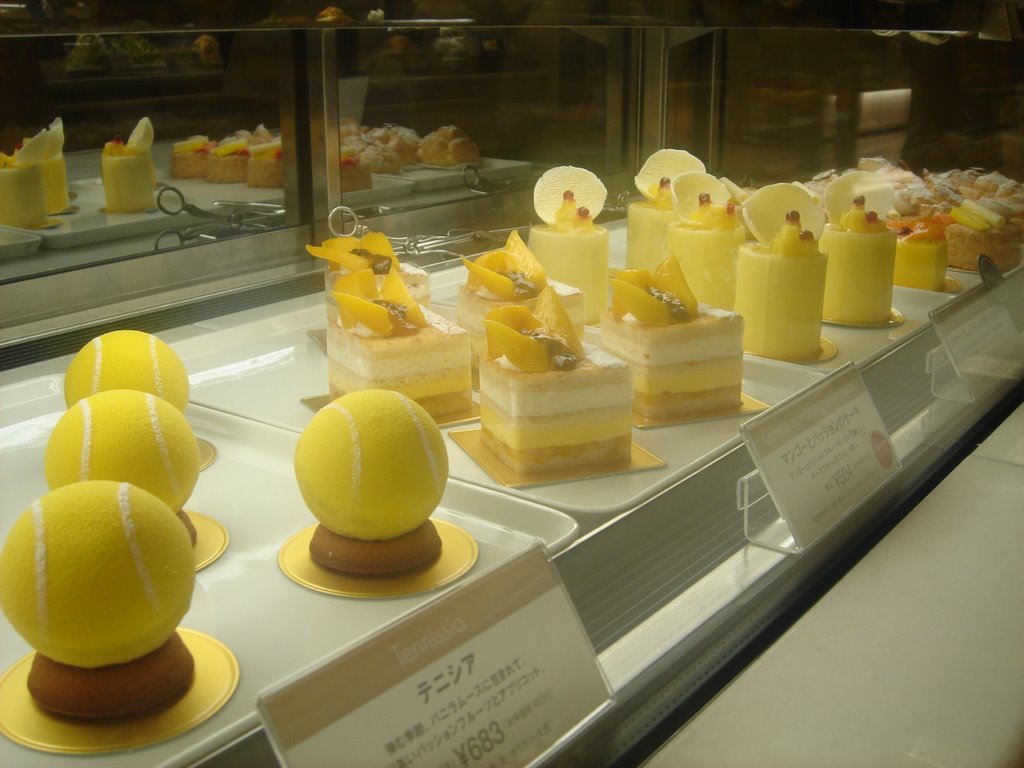
The photo above gives you a really good idea of the tremendous visual impact food can have. I took this photo at Isetan, one of the major department store chains in Japan, which sells food in addition to the typical clothes and make-up you’d expect to find. In fact, an entire floor is dedicated to food. This was just one display case of many, showcasing all kinds of sweet delights.
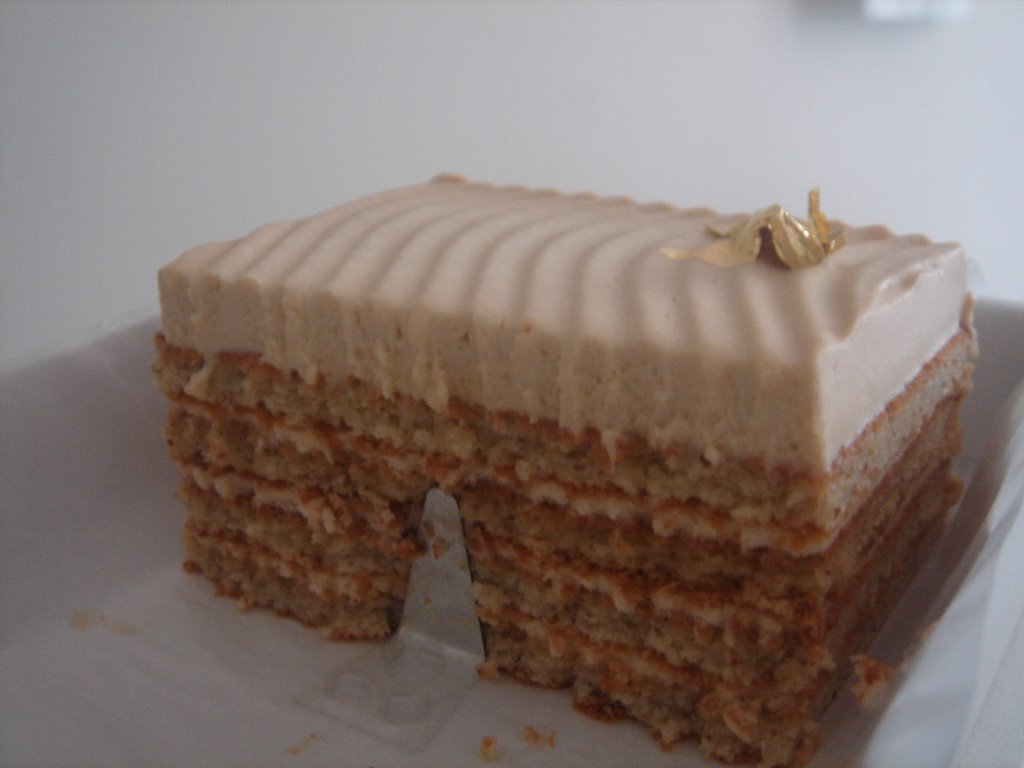
At Isetan, Sarah picked out quite a few cakes, and we tried them at home. One was this milk tea cake, which was absolutely delicious. The cake was surprisingly dense yet still fairly light, and the cream had a nice aromatic, Earl Grey flavor.
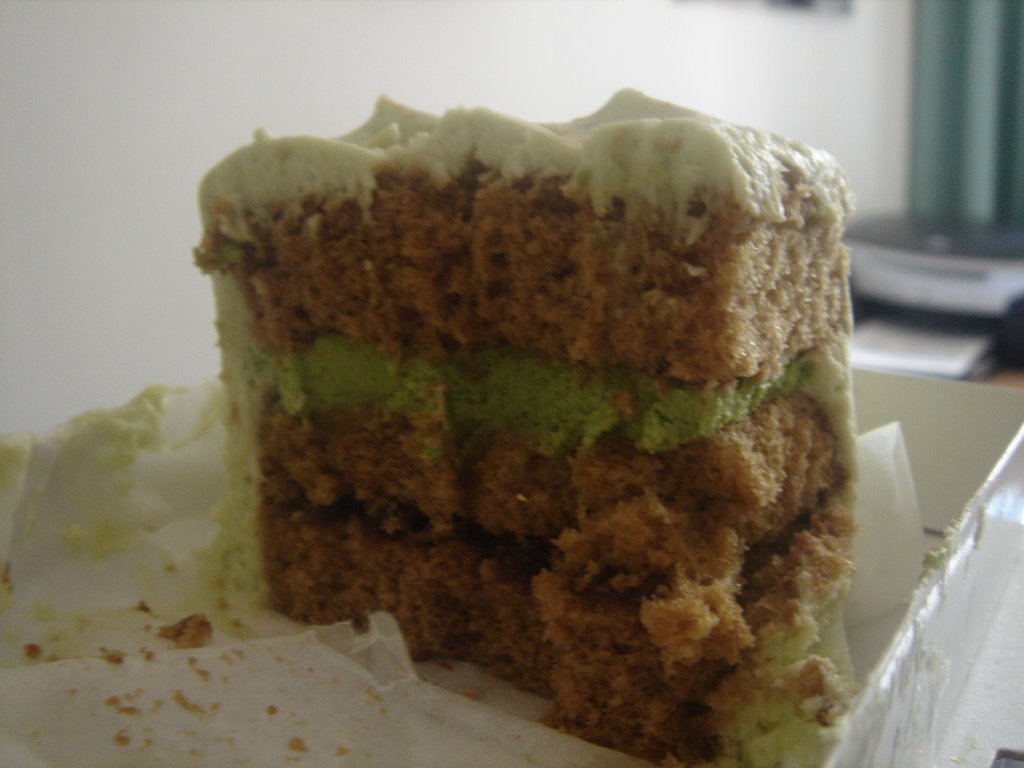
Another item we picked up was this green tea cake, which was extremely fluffy and had a slight bitterness to it, which I think is characteristic of chilled green tea.
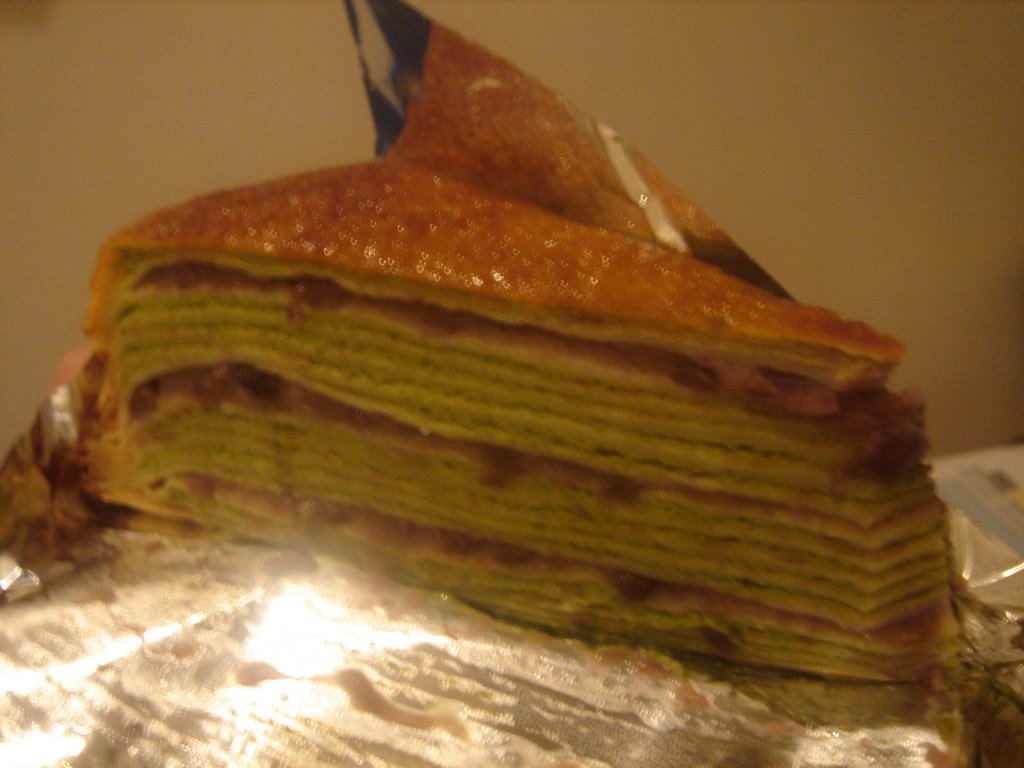
Japan is the land of green tea and azuki, so naturally many desserts feature these ingredients. This was the last of the cakes we picked up from Isetan, which was essentially thin crepes with green tea cream and azuki paste sandwiched between the layers - delicious.


On our last day in Kyoto, Sarah and I stopped for an afternoon snack at a small café called Eikokuya. It had a nice patio area overlooking the grand staircase and busy travelers on the first floor of the train station. We ordered two slices of chiffon cake, one which was green tea, the other milk tea-flavored. Both cakes were amazingly light and fluffy – it was almost like eating pillows of air.
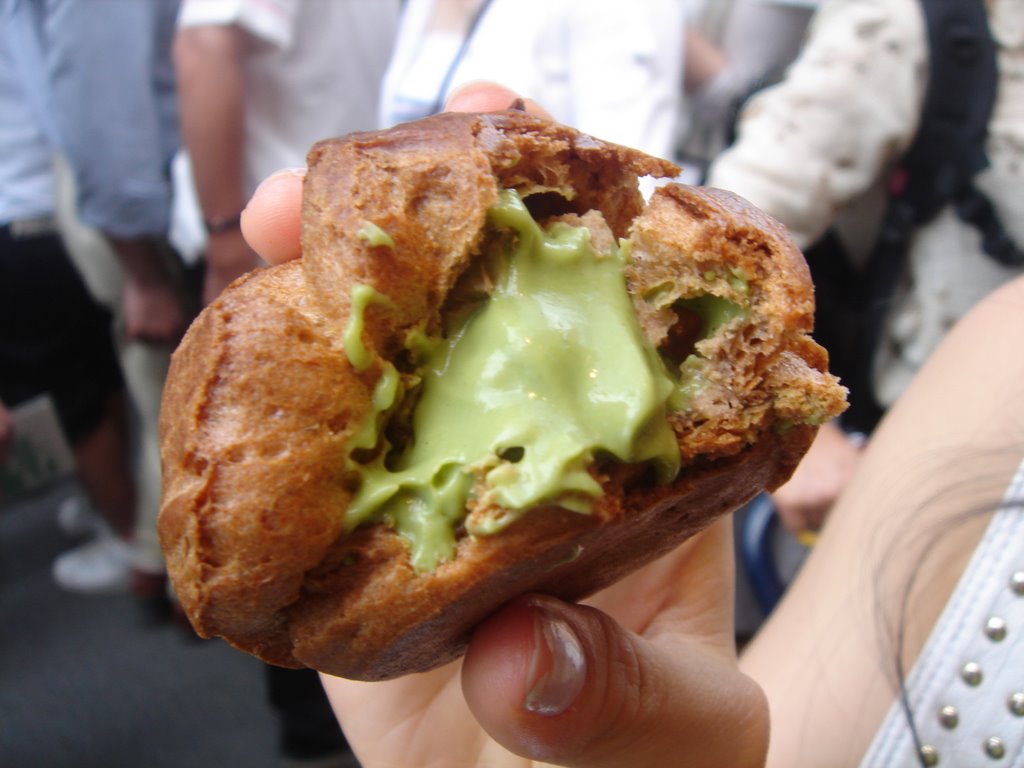
As we were walking back from one of the temples in Kyoto, we passed by a number of sidewalk vendors along a busy, tourist-laden street. This caught my eye, which was a cream puff with a green tea filling. It actually turned out to be one of the few disappointing snacks I had. The cream puff tasted a little hard and stale as if it had been sitting around, and the filling had an overwhelmingly bitter taste.
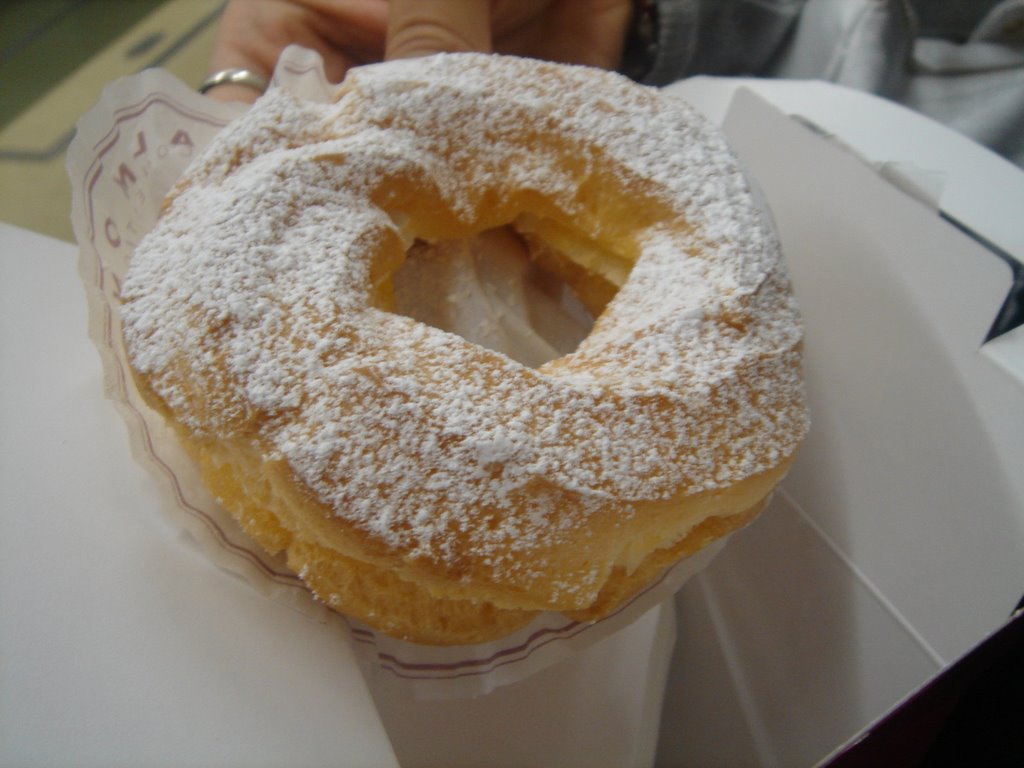
Back in Tokyo, on our way to the Meiji Jingu Shrine, we stopped into Almond, which is considered one of the best bakeries in the city. I tried one of Sarah’s favorites, choux de la crème, which was similar to a crème puff. It was light with whipped cream inside – a sweet treat to start the morning.
The Miyakes also ordered Lisa’s birthday cake from Almond, which I got to try. It was my first day in Tokyo and I arrived just as they were cutting it. I was still in a dazed stupor at that point, so I didn’t take a picture. The only thing I remember was the cake frosting tasting like maple-syrup – quite nice actually.

Hiroshima is famous for momiji-manju, which are sweet cakes shaped in maple leafs and made with all kinds of fillings. Azuki, chocolate, cream cheese, and jam are typical. The batter reminded me a little of a sponge cake. These were being sold everywhere we went, from Hiroshima station to Miyajima Island.


Sarah gave me a tour of her school’s neighborhood, and one of the areas she and friends would often go to grab lunch was Hiro-o, a quiet street with small shops and restaurants. Walking down the street, we spotted these red bean cakes, a childhood favorite of hers, being made fresh (shown above). It was nice biting into the warm and slightly chewy batter with sweet azuki paste inside.

I think we ate this fish-shaped cake in Hiroshima, but it was virtually the same in taste and texture as the one in Hiro-o.
So there you have it. I had a number of Japanese sweets, some of which were artsy and fancy and some of which were simple, humble, but nevertheless satisfying. I really enjoyed visiting Hiroshima and Kyoto and trying their local specialties. I can’t wait to go back to Japan to visit the rest of the country. I know many more tasty, undiscovered treats await.
Hokkai-en
On a Sunday afternoon, Sarah and I picked up lunch for the family in time for their return home from church. It was rainy that day and we didn’t want to go far, so we grabbed take-out from Hokkai-en, a Chinese restaurant located literally a five minute walk from Sarah’s apartment in Roppongi.
From what I’ve read, Hokkai-en ranks among the better Chinese restaurants in Tokyo, many people claiming that it serves the best Beijing-style cuisine in the whole city. It opened about 20 years ago and quickly grew a reputation for offering authentic, high-quality dishes.
I’m also told that the yakuza dine at Hokkai-en a lot, which could be another reason why I advocated for taking-out rather than dining-in. Perhaps subconsciously I feared the negative ramifications of a misplaced shrimp shell. I could imagine it all unfolding in my head like that infamous restaurant scene in the movie Pretty Woman…with a few extra gruesome details. I accidentally flip a clam or mussel onto a nearby table and next thing you know, I leave the restaurant with one less limb than I came in with.
When trying to place our order and ask for dish recommendations, the hostess had trouble communicating with us. She spoke no English and very little Japanese. One of the waitresses came over and noticed I was of Chinese ethnicity and started speaking Mandarin to me. Well, needless to say, she wasn’t much help either because being the disgrace that I am to my ancestors, I can’t speak a word of my native language. We ended up just pointing to the dishes that looked interesting to us.
From what I’ve read, Hokkai-en ranks among the better Chinese restaurants in Tokyo, many people claiming that it serves the best Beijing-style cuisine in the whole city. It opened about 20 years ago and quickly grew a reputation for offering authentic, high-quality dishes.
I’m also told that the yakuza dine at Hokkai-en a lot, which could be another reason why I advocated for taking-out rather than dining-in. Perhaps subconsciously I feared the negative ramifications of a misplaced shrimp shell. I could imagine it all unfolding in my head like that infamous restaurant scene in the movie Pretty Woman…with a few extra gruesome details. I accidentally flip a clam or mussel onto a nearby table and next thing you know, I leave the restaurant with one less limb than I came in with.
When trying to place our order and ask for dish recommendations, the hostess had trouble communicating with us. She spoke no English and very little Japanese. One of the waitresses came over and noticed I was of Chinese ethnicity and started speaking Mandarin to me. Well, needless to say, she wasn’t much help either because being the disgrace that I am to my ancestors, I can’t speak a word of my native language. We ended up just pointing to the dishes that looked interesting to us.
 Sauteed pea-pod stems
The pea pod stems were pretty similar what I’m used to having at the Cantonese-style restaurants I eat at – very garlicky.
 Pan-fried flat noodles with beef
We wanted a noodle dish, so I suggested this dish, which I assumed was Hokkai-en’s version of gwun chow gnor hor, a very standard dish in Chinese cuisine. Their version was okay – a tad dull I thought. I’ve definitely had much better before.
Beef and broccoli with oyster sauce
Beef and broccoli is another dish I always seem to order when I have Chinese food, so it was a no-brainer to order this. It turned out pretty tasty, and the beef was tender.

Fried Rice
I think we ordered this just so we could have some rice to go along with the meal. It was good but nothing too memorable.

Sauteed jumbo prawns
These prawns were by far my favorite. They were huge, succulent and really quite tasty smothered in the light sauce with a hint of garlic and leeks.

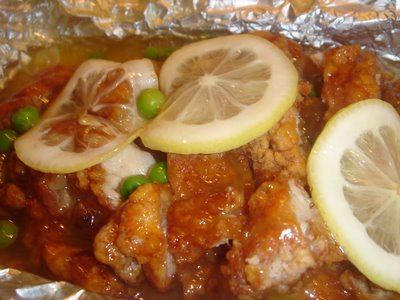
Lemon chicken
The lemon chicken was another highlight of the meal for me, and it’s funny because out of all the dishes, Sarah and I were on the fence about this the most. We were debating on ordering something else instead but finally went with this. The meat was deep-fried but still tender on the inside and was covered in a sweet, slightly tangy sauce.
So we ordered six dishes for four people to share, and the bill came to about 15,000 yen. In other words, this was not a cheap meal! Luckily for us, Sarah’s mom treated. Overall, I thought the meal was pretty good, but I’ve had better Chinese food elsewhere for much less money.
Out of all the cities I have visited with a respectable Chinese restaurant scene – Boston, New York, San Francisco, Vancouver, Sydney, Toronto, and now Tokyo – I would have to say that Toronto offers the best Chinese food. I’ve been to Toronto a few times (before I started my blog), and I’ve always had great meals there. I’m still waiting to visit Hong Kong and mainland China, and I'm really interested to see how the cuisine fares in its natural birthplace.
Uoki
After our day trip to Nikko, which was much of a disappointment due to the inclement weather, we grabbed sushi for dinner before heading home. Like the restaurant we ate at earlier in Harajuku, Uoki is a kaiten-sushi bar with a conveyor belt and the pay-as-you-eat system. Located near the ANA Hotel in Roppongi, Uoki is frequented by Sarah’s father and his co-workers for lunch on occasion. I figured that if it’s good enough for the Miyakes, it’s good enough for me.
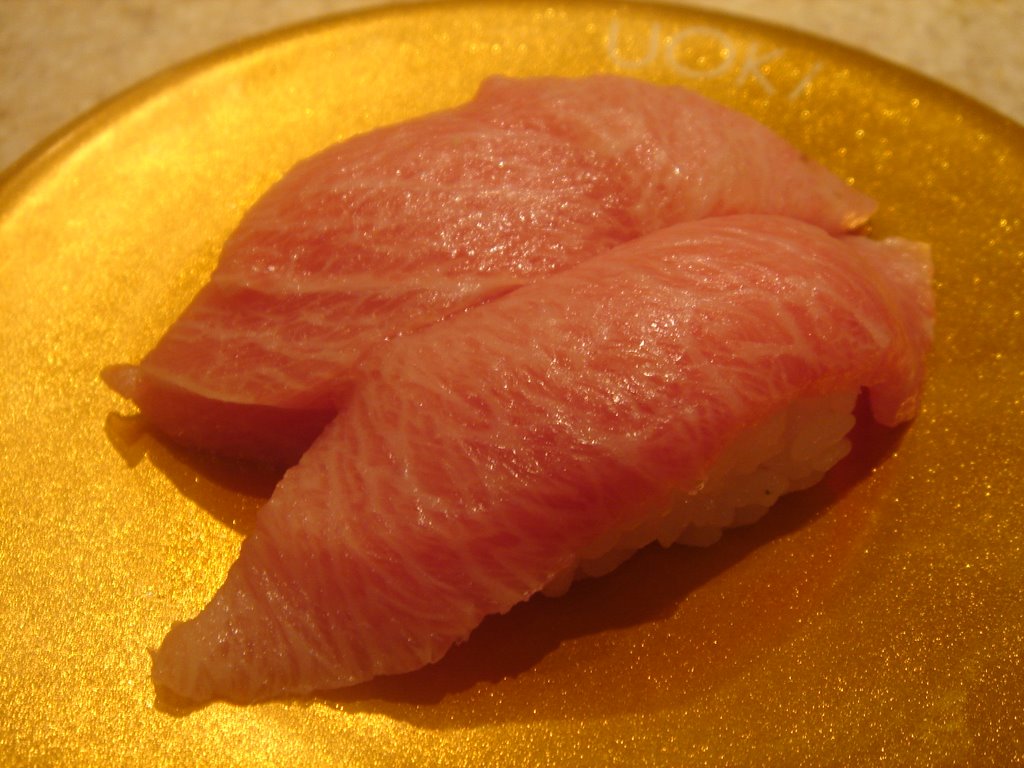 O-toro
We started off with a plate of o-toro, pieces from the tuna’s under-belly which is often the most prized (and not to mention expensive) part of the fish. At 950 yen per plate, the o-toro was definitely the most expensive item on the menu. The richness and taste of the fatty, unctuous flesh certainly justified the price, however. This was my first time trying o-toro raw in its pure form, and after experiencing it, I admit that it’s delicious but I actually prefer the regular tuna meat, which I think offers a cleaner flavor.
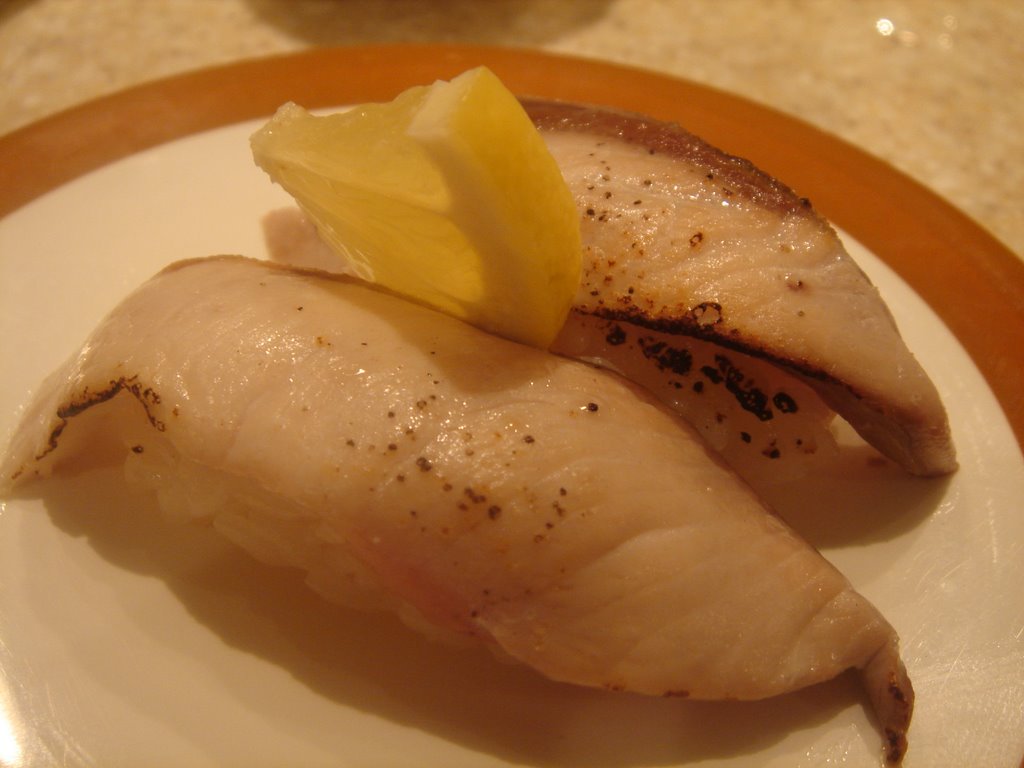
Sake
Next we ordered some salmon, which was slightly roasted on top but still raw underneath, creating a nice contrast. It’s quite amazing to me how different some fish like salmon can taste cooked as opposed to raw.

Sushi Special
This dish looked interesting to us as it passed by, so we decided to give it a try. This “sushi special” was a roll with a white fleshed fish wrapped around it marinated in a basil vinaigrette. Surprisingly, this was really tasty. Sarah enjoyed this so much that we ordered a second.
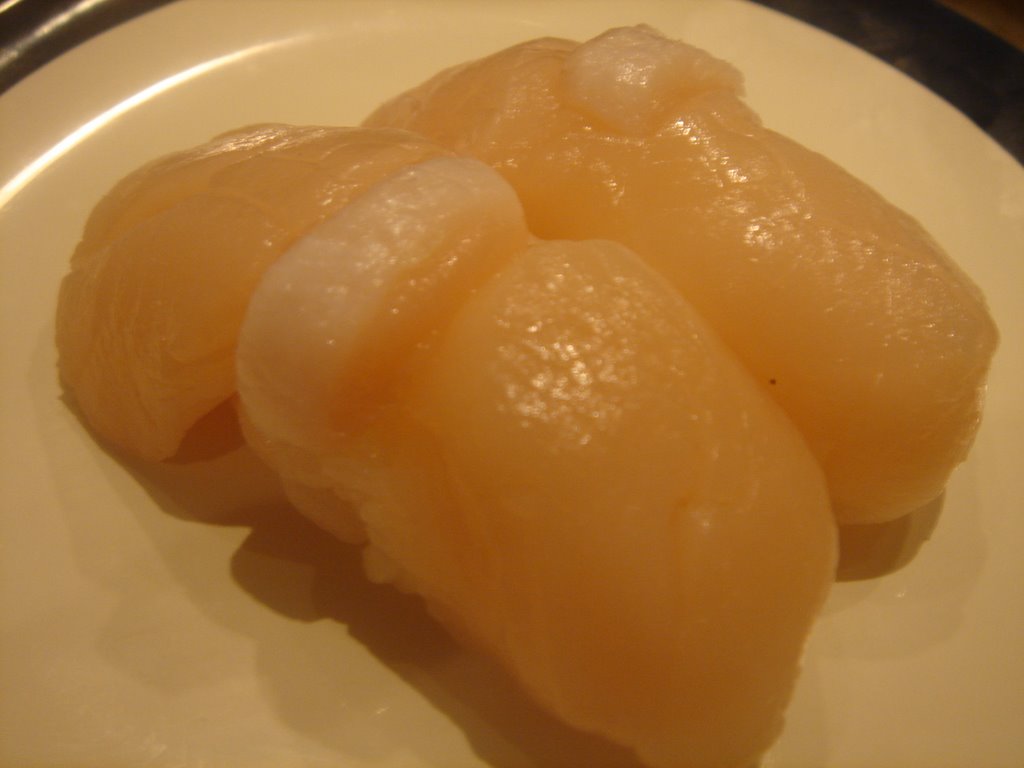
Hotate
During my trip to Japan, I fell in love with hotate, or sea scallop – so sweet and ever so tender. This was definitely one of my favorites.

Bonito
I experienced a lot of firsts during my trip, one of which was raw bonito. It came with diced up ginger and scallion, but I tried it on its own. It was slightly fishy and salty. The Japanese often use bonito as a base for all kinds of soups and broths, but that type of bonito is dried and cut into shavings. I’m not a fish expert by any means, but I don’t see bonito sold very often, if ever, in the US so I assume it must be a fish local to Japan.

Kanisarada
This crab salad was very simple, prepared with some mayo and vegetables – tasty but nothing out of the ordinary.

Hamachi
Not much to say about this yellow-tail, except very fresh, clean, and delicious. Yellow-tails feed on crustaceans and small fish, so their flesh has a nice natural flavor to it, which makes it perfect on its own as sushi.

Anago
Anago, or conger eel, came with a soy-teriyaki glaze and was tasty but slightly fishy. I guess I prefer unagi, which generally comes roasted providing it with a smokier flavor.

Tai
Sea bream was another first for me. It was subtle in flavor, and I could have easily mistaken it for some other white-fleshed fish.
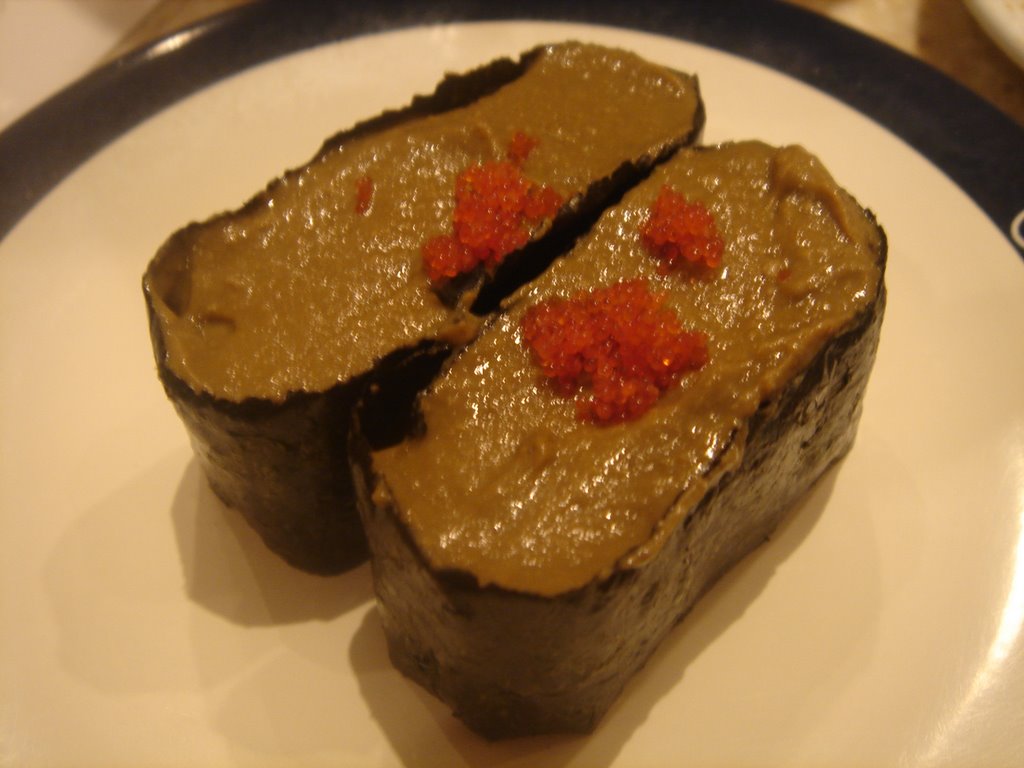
Kanimiso
I really enjoyed this crab brain, served on a rice roll in the warship-style. It was surprisingly delicious (tastier than it looks) and resembled liver in taste – pungent, smooth and creamy.
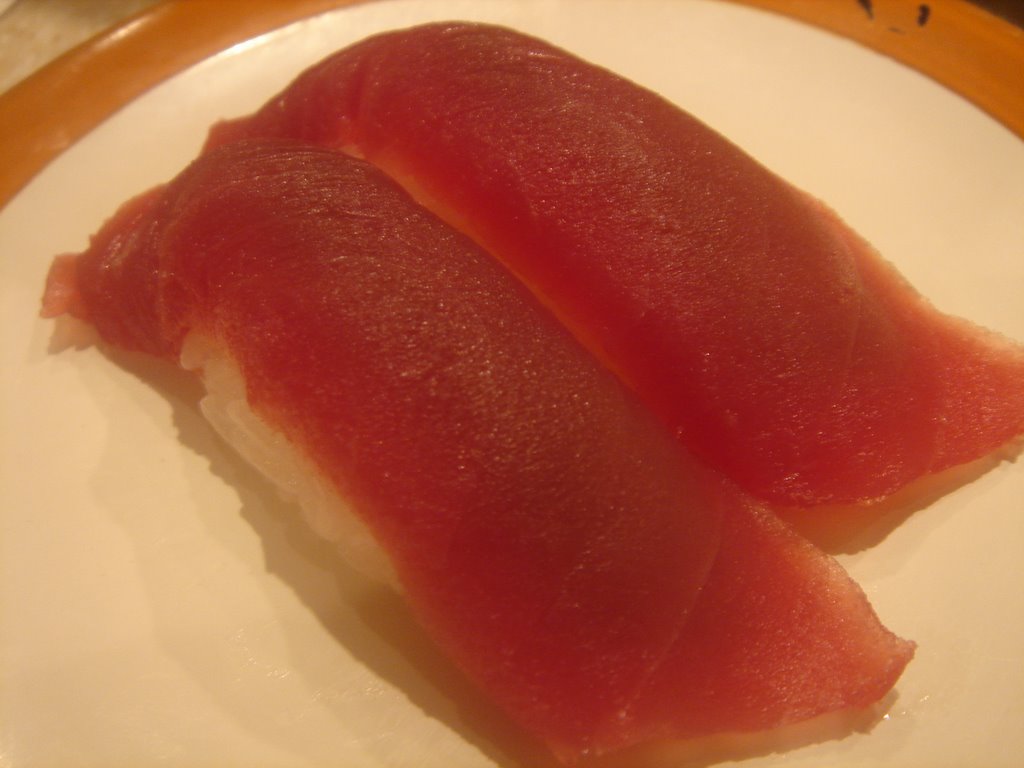
Maguro
We finished our meal with regular tuna, which was nicely cut, smooth in texture, and perfect with a dunk in soy and wasabi.
Overall, I was quite pleased with the quality of the fish, and I left with a full stomach on an incredibly reasonable tab. Uoki’s prices were slightly higher than Kaiten-Sushi in Harajuku, but the place was a little more upscale and given its location, they were fair. I definitely miss sushi in Japan!
Koke-kokko
During our first night in Kyoto, Sarah and I had dinner at Koke-kokko, a hip restaurant in Kyoto station that specialized in yaki-tori. Yaki-tori is a traditional Japanese preparation whereby skewers of chicken are marinated in a barbeque-ish type sauce and then grilled to perfection over hot charcoals. Like don-katsu, yaki-tori is far from fancy but delicious nonetheless.
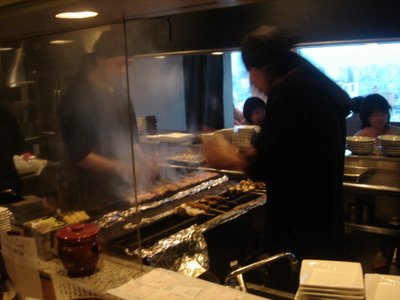
Koke-kokko was a pretty nice place with just the right mix of energy and intimacy. The wooden décor and dim lighting added ambiance to the restaurant while the meats grilling on the central cooking station shown below filled the room with smoky, inviting aromas.
Koke-kokko is about as upscale as you will get for a yaki-tori restaurant. More commonly yaki-tori is served at a stand in the street or a small casual restaurant consisting of a handful of stools pushed against the counter. Yaki-tori appeals especially to the after-work crowd in search of a savory snack before heading home. A group of salary men huddled around a table munching on yaki-tori while downing a few beers is a very common scene.
Koke-kokko offered a few dinner sets, but we opted for one of the more affordable choices, which went for 1,890 yen and consisted of stewed giblets, fresh cabbage with miso dip, and five different kinds of grilled items.

Our first dish was this stew, comprised mainly of chicken giblets and konnyaku and served with a piece of pesto toast on the side. Overall, it was tasty but a little too salty on its own. I didn’t take a picture of the cabbage but when I paired the stew with the vegetables, it was a lot better.

The first of the grilled items were these quail eggs. I love quail eggs on their own, so with the added sauce and smokiness from the grill, they were even more delicious.

This chicken breast with wasabi came next and was less impressive, however – a little dry for my liking.

My favorite item of the whole meal was probably this chicken with leeks. It was tender, moist, and savory.

Not much to say about these meatballs, but nicely cooked with good flavor.

Our last item of the night was these chicken thighs, and we waited quite a while for them. Our waitress had forgotten and apparently thought we were finished with the meal. Only until we inquired about them did she bring a batch over. It was worth the wait though – they were succulent and just delicious.
Overall, I had a great time and thoroughly enjoyed the food at Koke-kokko. It was a nice place to relax after a long day of site-seeing around Kyoto. I wouldn’t mind going back but I’m sure the yaki-tori served at more casual places is just as good and a bit cheaper.
Koke-kokko was a pretty nice place with just the right mix of energy and intimacy. The wooden décor and dim lighting added ambiance to the restaurant while the meats grilling on the central cooking station shown below filled the room with smoky, inviting aromas.

Koke-kokko is about as upscale as you will get for a yaki-tori restaurant. More commonly yaki-tori is served at a stand in the street or a small casual restaurant consisting of a handful of stools pushed against the counter. Yaki-tori appeals especially to the after-work crowd in search of a savory snack before heading home. A group of salary men huddled around a table munching on yaki-tori while downing a few beers is a very common scene.
Koke-kokko offered a few dinner sets, but we opted for one of the more affordable choices, which went for 1,890 yen and consisted of stewed giblets, fresh cabbage with miso dip, and five different kinds of grilled items.

Our first dish was this stew, comprised mainly of chicken giblets and konnyaku and served with a piece of pesto toast on the side. Overall, it was tasty but a little too salty on its own. I didn’t take a picture of the cabbage but when I paired the stew with the vegetables, it was a lot better.

The first of the grilled items were these quail eggs. I love quail eggs on their own, so with the added sauce and smokiness from the grill, they were even more delicious.

This chicken breast with wasabi came next and was less impressive, however – a little dry for my liking.

My favorite item of the whole meal was probably this chicken with leeks. It was tender, moist, and savory.
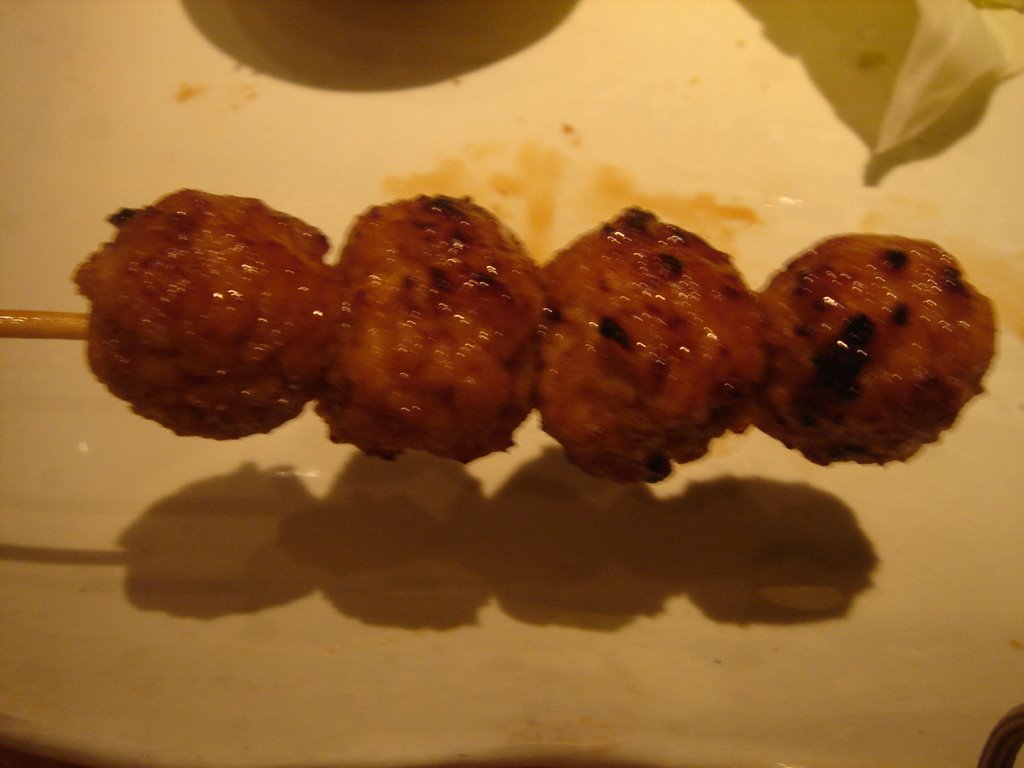
Not much to say about these meatballs, but nicely cooked with good flavor.

Our last item of the night was these chicken thighs, and we waited quite a while for them. Our waitress had forgotten and apparently thought we were finished with the meal. Only until we inquired about them did she bring a batch over. It was worth the wait though – they were succulent and just delicious.
Overall, I had a great time and thoroughly enjoyed the food at Koke-kokko. It was a nice place to relax after a long day of site-seeing around Kyoto. I wouldn’t mind going back but I’m sure the yaki-tori served at more casual places is just as good and a bit cheaper.
Donkatsu
In Kyoto, I tried for the first time don-katsu, which essentially is the Japanese version of deep-fried pork cutlet. Panko bread crumbs are used and once the pork is all smothered in them, it’s then deep-fried until golden-brown. Don-katsu is very common in Japan and widely available, found at supermarkets, street vendors, and both low and high-end restaurants. The only difference is the quality of the pork used - from what I’ve read, the more upscale places use black pig, a rare and coveted species raised in Kagoshima Prefecture. If you're interested in making this and other dishes at home, check out my new blog, Modernist Foodie.
I ordered the standard lunch set, which came with a simple soup broth, the deep-fried pork, and some shredded cabbage. My dining companion ordered the same set, except she requested shrimp instead of pork. I tried some of each, and both were pretty good. I enjoyed the contrasts of textures - the exterior, crispy and crunchy and the interior, surprisingly moist and tender. Don-katsu isn’t anything fancy but it is rather tasty. After all, anything battered and deep-fried tastes pretty good, don't you think?


So the photos shown above are really of just plastic food samples. Ok, I'm just kidding - but they do look pretty damn close. What you'll notice in Japan is that outside the majority of casual restaurants are huge display cases showcasing the menu items you can order inside. They’re like the fake fruit you’ll find in a basket at kitchen appliance or furniture stores.
Aside from their tackiness, the plastic samples do provide some use. Most of the time they present a fairly accurate visual of the actual food you’ll eat. There are no tricks or surprises here - what you see is what you get. It saves you the rather irritating and disappointing experience of ordering a dish that sounded great on paper but in reality, looked closer to dog poo than don perignon.
American restaurants don’t share the same love affair with plastic food displays - I’m thankful they don’t. I’m not in any way suggesting that they should adopt this practice. However, it does illustrate quite well what any successful business must do - and that is, manage expectations. Dissatisfaction occurs because customers enter expecting a certain level of quality and end up getting served something less. It’s as simple as that. When you remove the uncertainty with say, a plastic food sample, it’s much easier to have your customers leave happy and “satisfied.”
I ordered the standard lunch set, which came with a simple soup broth, the deep-fried pork, and some shredded cabbage. My dining companion ordered the same set, except she requested shrimp instead of pork. I tried some of each, and both were pretty good. I enjoyed the contrasts of textures - the exterior, crispy and crunchy and the interior, surprisingly moist and tender. Don-katsu isn’t anything fancy but it is rather tasty. After all, anything battered and deep-fried tastes pretty good, don't you think?


So the photos shown above are really of just plastic food samples. Ok, I'm just kidding - but they do look pretty damn close. What you'll notice in Japan is that outside the majority of casual restaurants are huge display cases showcasing the menu items you can order inside. They’re like the fake fruit you’ll find in a basket at kitchen appliance or furniture stores.
Aside from their tackiness, the plastic samples do provide some use. Most of the time they present a fairly accurate visual of the actual food you’ll eat. There are no tricks or surprises here - what you see is what you get. It saves you the rather irritating and disappointing experience of ordering a dish that sounded great on paper but in reality, looked closer to dog poo than don perignon.
American restaurants don’t share the same love affair with plastic food displays - I’m thankful they don’t. I’m not in any way suggesting that they should adopt this practice. However, it does illustrate quite well what any successful business must do - and that is, manage expectations. Dissatisfaction occurs because customers enter expecting a certain level of quality and end up getting served something less. It’s as simple as that. When you remove the uncertainty with say, a plastic food sample, it’s much easier to have your customers leave happy and “satisfied.”
Edogawa
Having lived in Japan for almost 14 years, my girlfriend has traveled throughout most of Japan. One of the few places she hadn't been to surprisingly was Kyoto, so this was new turf for the both of us. Being unfamiliar with the city, we stayed close to Kyoto's train station, a massive architectural wonder built just years ago. Being the city's main transportation hub, it was constantly buzzing with activity and just so happened to house a number of restaurants.
After we spent the morning poking around Kyoto and visiting its many temples, we returned to have a quick, late lunch at a restaurant called Edogawa, specializing in one of my all-time favorites - unagi.
We both ordered similar lunch sets, which came with soup, pickled vegetables, and a rice bowl with broiled unagi. Given my love for unagi and my appetite after a morning of walking, I thoroughly enjoyed the meal. However, I must say that although it was good, it wasn't the unagi that really impressed me - it was the soup. The picture didn't turn out too well, so I didn't post it but it was really quite delicious. Made from some kind of vegetable or seafood as its base (whichever it was, it was foreign to me), the soup was warm, savory, and hearty. I liked it so much I even drank Sarah's.

For the past three weeks or so, I've been home relaxing. I've had the time, but just not the motivation to work on these blog entries. I'm so behind right now it's not even funny. I still have a quite a few entries from Japan to do, and Las Vegas and Phoenix are up after that. My goal is to do some hardcore blogging over the next few days, so stay tuned...
After we spent the morning poking around Kyoto and visiting its many temples, we returned to have a quick, late lunch at a restaurant called Edogawa, specializing in one of my all-time favorites - unagi.
We both ordered similar lunch sets, which came with soup, pickled vegetables, and a rice bowl with broiled unagi. Given my love for unagi and my appetite after a morning of walking, I thoroughly enjoyed the meal. However, I must say that although it was good, it wasn't the unagi that really impressed me - it was the soup. The picture didn't turn out too well, so I didn't post it but it was really quite delicious. Made from some kind of vegetable or seafood as its base (whichever it was, it was foreign to me), the soup was warm, savory, and hearty. I liked it so much I even drank Sarah's.

For the past three weeks or so, I've been home relaxing. I've had the time, but just not the motivation to work on these blog entries. I'm so behind right now it's not even funny. I still have a quite a few entries from Japan to do, and Las Vegas and Phoenix are up after that. My goal is to do some hardcore blogging over the next few days, so stay tuned...
Lamb Shabu
I honestly cannot say enough about the restaurant scene in Japan. It’s diverse, it’s high in quality, and you will find great places to eat everywhere you go. And when I say everywhere, I mean it – from the obvious places like the department store or sidewalk vendor to the less apparent like the unassuming building next door. A great example was Lamb Shabu, a small, intimate restaurant nestled inconspicuously in one of Ginza’s low-rises.
During my stay in Tokyo, I couldn’t help but notice how discreet so many restaurants were, tucked away on, say, the fifth or sixth floor in one of the thousands of low-rises in the city. If you weren’t in the know, you’d miss out on some great meals because where some of these places are located, you’d never think twice about looking. Lamb Shabu was a perfect example - I could have easily mistaken it for some whole-in-the-wall.
In this regard, Japan is a lot different from the States where promotion and advertising rule. To me it seems that American restaurant owners adopt a really aggressive style with huge banners and neon lights outside their storefronts, almost screaming to any joe-schmo to come in and spend some money.
The Japanese seem to have a different approach that is more mild-mannered, perhaps even elitist you could say. A lot of Japanese restaurants don’t care to serve just anyone. They don’t intend on rapidly expanding, franchising the brand to the next guy who wants a piece of the action. Their main form of marketing is not the loud, blaring lights of blue neon, but rather the positive word-of-mouth spread by real gourmands, foodies who truly appreciate the quality the restaurants achieve by keeping operations small and who return religiously because they know the next dining experience will be as good as the last.
I can’t say which approach is better or worse. Both are certainly different, and they really have to be since the competitive landscape in each country is so different. In Japan, restaurant owners face a more discerning food-eating public who have grown accustomed to the high quality of food served at the multitude of fine establishments throughout the country. They must differentiate and continually impress in order to keep customers coming back. Meanwhile, in the States, Americans grow up on a steady diet of hamburgers and hotdogs. It’s no wonder then that fine dining comprises such a small percentage of the American market. American restaurateurs can afford to be less exacting when it comes to their product offering.
While in Japan, I had several great meals at a number of restaurants, but I’d have to say that Lamb Shabu was definitely near the top of my list. Lamb Shabu, as its name implies, specializes in lamb rather than beef or pork found more commonly at most shabu shabu restaurants.
 Our meal started off with a number of small plates, including edamame, rice rolls, and pickled vegetables. Since we opted for the all-you-can-eat deal, we could have as much lamb and as many of the side dishes as we desired.
 The quality of the lamb meat was fantastic. The meat came served on trays as shown above and was semi-frozen so the meat could be shaved ultra-thin. The lamb was really fresh and you could eat it raw if you so desired. A lot of people don’t like lamb because of its gamey nature, but there was no such odor with this lamb.
I never ate a lot of shabu shabu before but having tried it a few times now, I can see why it’s such a hit among the Japanese and Asians in general. It’s simple, satisfying, and extremely healthy too. Overall, I was really pleased by the meal at Lamb Shabu and grateful that the Miyake family took me there because the lamb variation is quite unique. The meal at Lamb Shabu was fantastic, and it’s no wonder that it recently won an award for best new restaurant in Ginza.
During my stay in Tokyo, I couldn’t help but notice how discreet so many restaurants were, tucked away on, say, the fifth or sixth floor in one of the thousands of low-rises in the city. If you weren’t in the know, you’d miss out on some great meals because where some of these places are located, you’d never think twice about looking. Lamb Shabu was a perfect example - I could have easily mistaken it for some whole-in-the-wall.
In this regard, Japan is a lot different from the States where promotion and advertising rule. To me it seems that American restaurant owners adopt a really aggressive style with huge banners and neon lights outside their storefronts, almost screaming to any joe-schmo to come in and spend some money.
The Japanese seem to have a different approach that is more mild-mannered, perhaps even elitist you could say. A lot of Japanese restaurants don’t care to serve just anyone. They don’t intend on rapidly expanding, franchising the brand to the next guy who wants a piece of the action. Their main form of marketing is not the loud, blaring lights of blue neon, but rather the positive word-of-mouth spread by real gourmands, foodies who truly appreciate the quality the restaurants achieve by keeping operations small and who return religiously because they know the next dining experience will be as good as the last.
I can’t say which approach is better or worse. Both are certainly different, and they really have to be since the competitive landscape in each country is so different. In Japan, restaurant owners face a more discerning food-eating public who have grown accustomed to the high quality of food served at the multitude of fine establishments throughout the country. They must differentiate and continually impress in order to keep customers coming back. Meanwhile, in the States, Americans grow up on a steady diet of hamburgers and hotdogs. It’s no wonder then that fine dining comprises such a small percentage of the American market. American restaurateurs can afford to be less exacting when it comes to their product offering.
While in Japan, I had several great meals at a number of restaurants, but I’d have to say that Lamb Shabu was definitely near the top of my list. Lamb Shabu, as its name implies, specializes in lamb rather than beef or pork found more commonly at most shabu shabu restaurants.
 Our meal started off with a number of small plates, including edamame, rice rolls, and pickled vegetables. Since we opted for the all-you-can-eat deal, we could have as much lamb and as many of the side dishes as we desired.
 The quality of the lamb meat was fantastic. The meat came served on trays as shown above and was semi-frozen so the meat could be shaved ultra-thin. The lamb was really fresh and you could eat it raw if you so desired. A lot of people don’t like lamb because of its gamey nature, but there was no such odor with this lamb.
I never ate a lot of shabu shabu before but having tried it a few times now, I can see why it’s such a hit among the Japanese and Asians in general. It’s simple, satisfying, and extremely healthy too. Overall, I was really pleased by the meal at Lamb Shabu and grateful that the Miyake family took me there because the lamb variation is quite unique. The meal at Lamb Shabu was fantastic, and it’s no wonder that it recently won an award for best new restaurant in Ginza.
Miyajima
When Sarah and I visited Hiroshima, we made a day trip to Miyajima, a small island located a short ferry ride from the city. Miyajima is considered one of the country’s most scenic islands, and naturally it is a huge attraction in Japan with thousands of tourists from around the world visiting yearly. Miyajima is best known for its massive red tori gate, built just off the island which gives it the appearance of floating on water during high tide. According to what I’ve read, the temples and shrines were built in similar fashion to avoid offending the Gods since the land on Miyajima was considered that sacred.
While the times have changed and it is no longer forbidden to tread ashore, there’s really not much on the island besides the few temples and shrines located on the coast. The majority of the action is concentrated in and around a few main streets close to the ferry dock where small shops and restaurants are located.
Being an island completely surrounded by water with access to some of the best fish and crustacean available, Japan naturally is a seafood-consuming nation. While it’s fair to say that a love for seafood is universal throughout Japan, each area specializes in different items. Miyajima happens to be famous for oysters.
There were quite a few restaurants to choose from and they all looked more or less the same, but Sarah had visited Miyajima before on a school trip and wanted to return to the place she had eaten at years ago. After some searching, we finally found it (or so we think).

We were hungry so in addition to the oysters, we ordered a bowl of cold soba noodles that came with some soy sauce, seaweed, wasabi, scallions, and a raw egg. Originally when placing the order, I thought the egg would be semi-cooked but I should known better - the Japanese love their stuff raw! We ended up mixing all the ingredients together, and it turned out so-so. I think I would have preferred it warm, and I really could have done without the egg.

While the times have changed and it is no longer forbidden to tread ashore, there’s really not much on the island besides the few temples and shrines located on the coast. The majority of the action is concentrated in and around a few main streets close to the ferry dock where small shops and restaurants are located.
Being an island completely surrounded by water with access to some of the best fish and crustacean available, Japan naturally is a seafood-consuming nation. While it’s fair to say that a love for seafood is universal throughout Japan, each area specializes in different items. Miyajima happens to be famous for oysters.
There were quite a few restaurants to choose from and they all looked more or less the same, but Sarah had visited Miyajima before on a school trip and wanted to return to the place she had eaten at years ago. After some searching, we finally found it (or so we think).
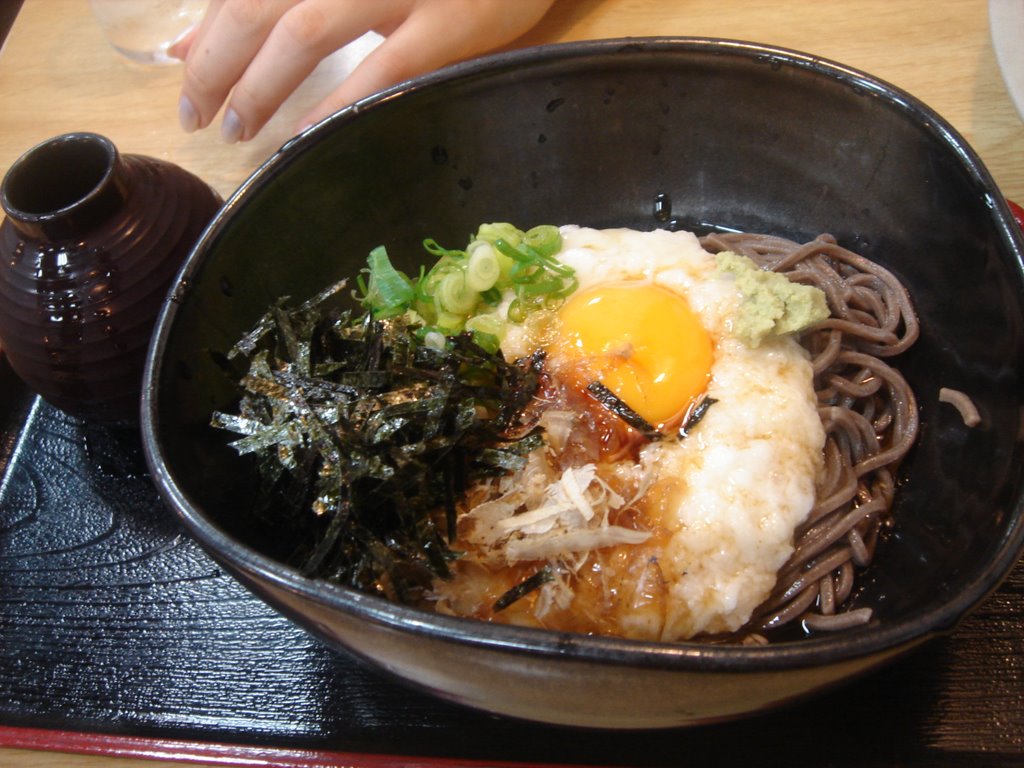
We were hungry so in addition to the oysters, we ordered a bowl of cold soba noodles that came with some soy sauce, seaweed, wasabi, scallions, and a raw egg. Originally when placing the order, I thought the egg would be semi-cooked but I should known better - the Japanese love their stuff raw! We ended up mixing all the ingredients together, and it turned out so-so. I think I would have preferred it warm, and I really could have done without the egg.

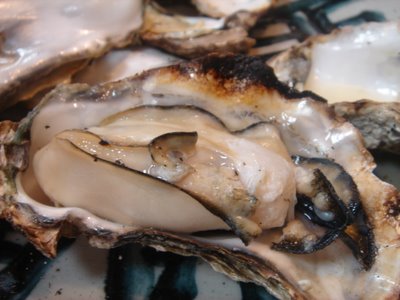
So on to the good stuff – the oysters. We ordered two different preparations – raw and grilled. I’ll admit that I haven’t eaten a lot of raw oysters in my lifetime, but these in Miyajima were about as fresh and good as any I’ve had previously. They were salty, briny, just delicious. Some grated radish, scallion, and a soy-based sauce also accompanied the dish, which you could add as you so pleased.
My favorite of the two, however, was the grilled oysters. They weren’t actually grilled but more so placed on top a charcoal grill and steamed open from the heat. These were fantastic. They had a firmer bite, and because they were steamed in shell, all the wonderful natural juice – what many people refer to as the oyster liquor – was retained.
Overall, I really enjoyed the meal, though I could have passed on the soba. However, I didn’t mind too much because I didn’t come for the soba – I came for the oysters, and they were everything they were billed to be. It was a great example of how superior ingredients don’t need elaborate preparations or loads of seasoning. They are great on their own, enjoyed best simply.
Inokuya
On one of my first car rides through Tokyo, Sarah briefly mentioned that we had passed by a restaurant called Inokuya, which her father wanted to take me to later during my stay. She also mentioned the words “pork sushi.” I thought it was an interesting concept, but for some reason, I had only moderate expectations for it. I had the impression that the restaurant would be small and casual, and the image in my mind of pork sushi was a roll with some kind of sauteed pork mixture inside. Well, I was completely wrong. About two weeks later, Sarah’s father took the family and I out to eat at Inokuya, and it turned out to be one of the best meals I had during my stay in Japan.
Inokuya turned out to be a really modern, upscale restaurant located in one of the swank skyscrapers of Roppongi. The restaurant specializes solely in pork dishes, hence its name “Inokuya” which roughly translates to “little pig” in English (or so I am told). On our way to our table, we passed by the kitchen and from what I saw, I already knew I was in for a great meal. It was nice too because we got seated in our own private room, which was quiet and dimly light, making for a really intimate environment.
Being from the States, I’m accustomed to having an appetizer, main, and dessert comprise most meals, which is why the multi-course, tasting menu style at Inokuya was a real treat.

The meal started off with this cold appetizer dish - a piece of chilled tofu, topped with some pickled okra slices and wasabi, on top of a briny gelee. It was clean and refreshing.

Next came this salad dish, which was dressed lightly in a simple vinagrette and topped with some slices of really fatty pork. I’m not sure what kind of cut it was, but it seemed almost like cured bacon to me. Overall, it was a nice dish but the pork was a little too chewy for my liking, and I would have preferred it if the meat were leaner.
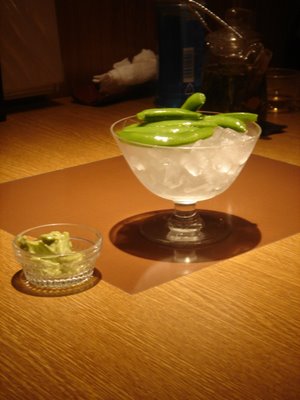
This dish, some snow peas with a green tea infused mayonnaise, was really creative I thought. It was crisp and light, which is exactly what you want in a palate cleanser.
Inokuya turned out to be a really modern, upscale restaurant located in one of the swank skyscrapers of Roppongi. The restaurant specializes solely in pork dishes, hence its name “Inokuya” which roughly translates to “little pig” in English (or so I am told). On our way to our table, we passed by the kitchen and from what I saw, I already knew I was in for a great meal. It was nice too because we got seated in our own private room, which was quiet and dimly light, making for a really intimate environment.
Being from the States, I’m accustomed to having an appetizer, main, and dessert comprise most meals, which is why the multi-course, tasting menu style at Inokuya was a real treat.

The meal started off with this cold appetizer dish - a piece of chilled tofu, topped with some pickled okra slices and wasabi, on top of a briny gelee. It was clean and refreshing.

Next came this salad dish, which was dressed lightly in a simple vinagrette and topped with some slices of really fatty pork. I’m not sure what kind of cut it was, but it seemed almost like cured bacon to me. Overall, it was a nice dish but the pork was a little too chewy for my liking, and I would have preferred it if the meat were leaner.
This dish, some snow peas with a green tea infused mayonnaise, was really creative I thought. It was crisp and light, which is exactly what you want in a palate cleanser.
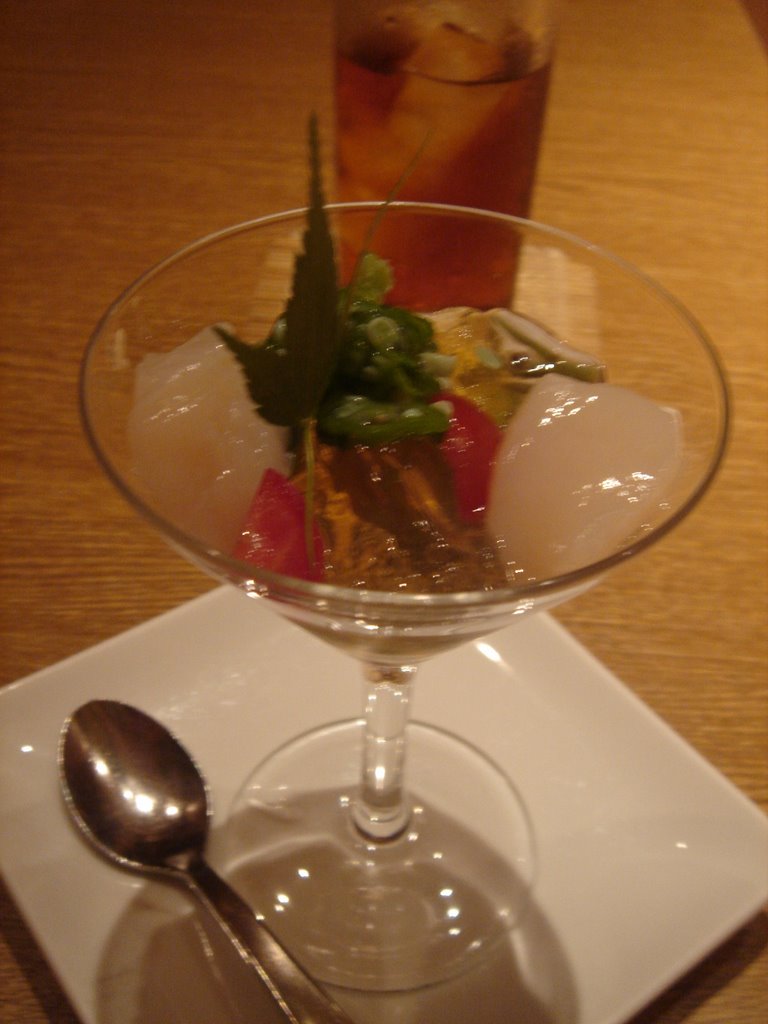
Served in this martini glass were more cold ingredients. The sweetness of the raw scallops and grape tomatos balanced out the sharpness of the pungent, acidic gelee. I personally liked the dish, but Bryan, Lisa’s boyfriend, later told me he hated this and had a hard time keeping it down. I thought that was kind of funny.


The next course was pork ribs with three different kinds of preparation – salt and pepper, herb butter, and chili tomato. I got to try all three and my favorite was the herb butter. The meat was really tender and the flavors were great.
 Our waiter came by with this whole roast pork and carved us each a piece. This was definitely one of my favorites of the night. The seasoning was simple, but it really accentuated the meat and let the natural pork flavor come through. It was also cooked on the rare side to keep the meat moist and tender.

 Now, I know what you’re thinking. Consuming raw pork is dangerous and pretty nasty. Well, you’re wrong! I thought the exact same thing, which is why when Sarah first mentioned pork sushi, the idea of pork sashimi never crossed my mind. Normally, I won’t eat raw pork, but if there is one place where I will, it’s Japan. Japan’s health and safety standards when it comes to food are extremely high. We were served three kinds of sushi – one completely raw with a soy glaze, one slightly charred, and one lightly roasted. They were all surprisingly delicious. I’d say take my word for it but I know you won’t, so it’s something you’ll have to try on your own.

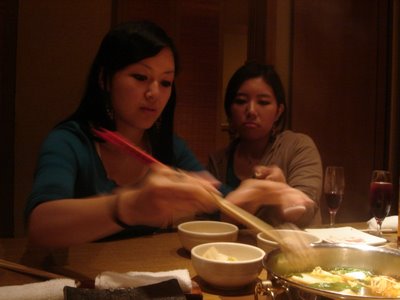
We had a little time to chill out and digest before the next course – pork shabu shabu. We ordered two platters of meat for six people, so to say that there was a lot of food is even an understatement. As usual, some vegetables were supplied to flavor the broth, which was slightly spicy and resembled kim-chi in flavor.
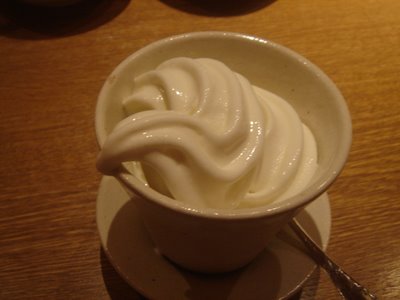 By this time, I was completely stuffed, but there’s always room for dessert, right? We finished the marathon meal with this soft-serve ice-cream. It doesn’t look like anything out of the ordinary, but it was actually really good. The cream used is from Hokkaido where the good stuff is from!
Overall, I thoroughly enjoyed the meal. It was definitely one of the highlights of my trip. I love pork in general, so to dine at a restaurant specializing in pork was a huge treat. I can’t stress enough how thankful I am to the Miyake family because they really did spoil me. Inokuya was one of the many memorable dining experiences in Japan, and I still have quite a few entries left, so stay tuned!

Subscribe to:
Posts (Atom)